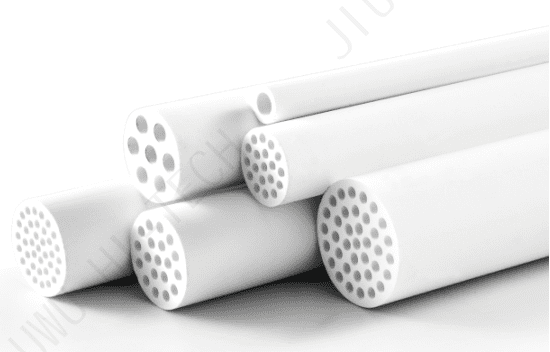
Inorganic ceramic membrane is a precision filter material with porous
structure, which is made of alumina, titanium oxide, zirconia and other
inorganic ceramic materials through high-temperature sintering. It is
composed of asymmetric distribution with porous support layer,
transition layer and membrane layer. The filtration accuracy covers
microfiltration, ultrafiltration, and small pore size (≥ 2nm), which can
be widely used for separation in pharmaceutical, food, chemical and
other production processes.
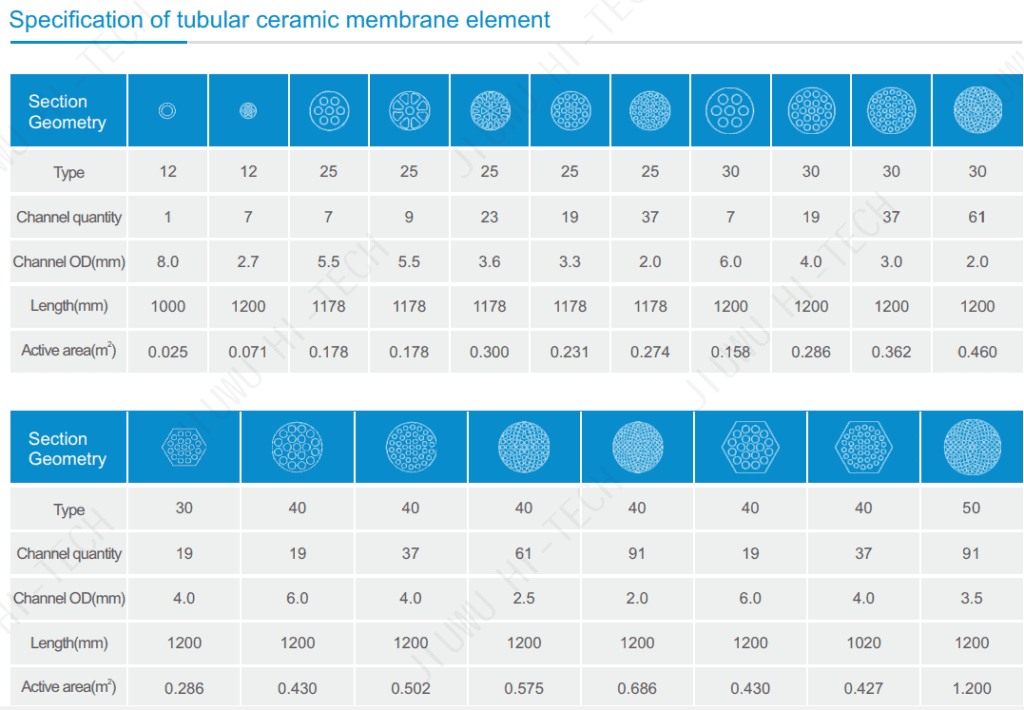
Details

Advantages of tubular ceramic material

  • Chemical, acid, alkali, oxidation and organic solvent resistance
  • High temperature resistance, good high-temperature disinfection
    and steam sterilization
  • High mechanical strength, wear-resistant, washable, and recoil resistant
  • Dry storage, convenient for storage and maintenance
  • No material degradation, no dissolved matter
  • Biological inertness, antibacterial
  • Good reproducibility, reusable

Benefit

  • Selected high-purity and high-quality Al2O3, ZrO2,
    and TiO as raw materials
  • The international advanced production formula
    enhances the hydrophilicity of the membrane,
    and the Ceramic membrane has better flux
  • Advanced dispersion technology to prepare
    nanoparticles, taking into account the uniformity
    and strength of ceramic membrane
  • Automation and standardization of production
    processes, achieving traceability throughout the
    entire quality process

Features

Application

  • Municipal sewage treatment
  • Industrial wastewater treatment
  • Drinking water treatment
  • RO/NF Pretreatment
  •  

Ask a Quotion?