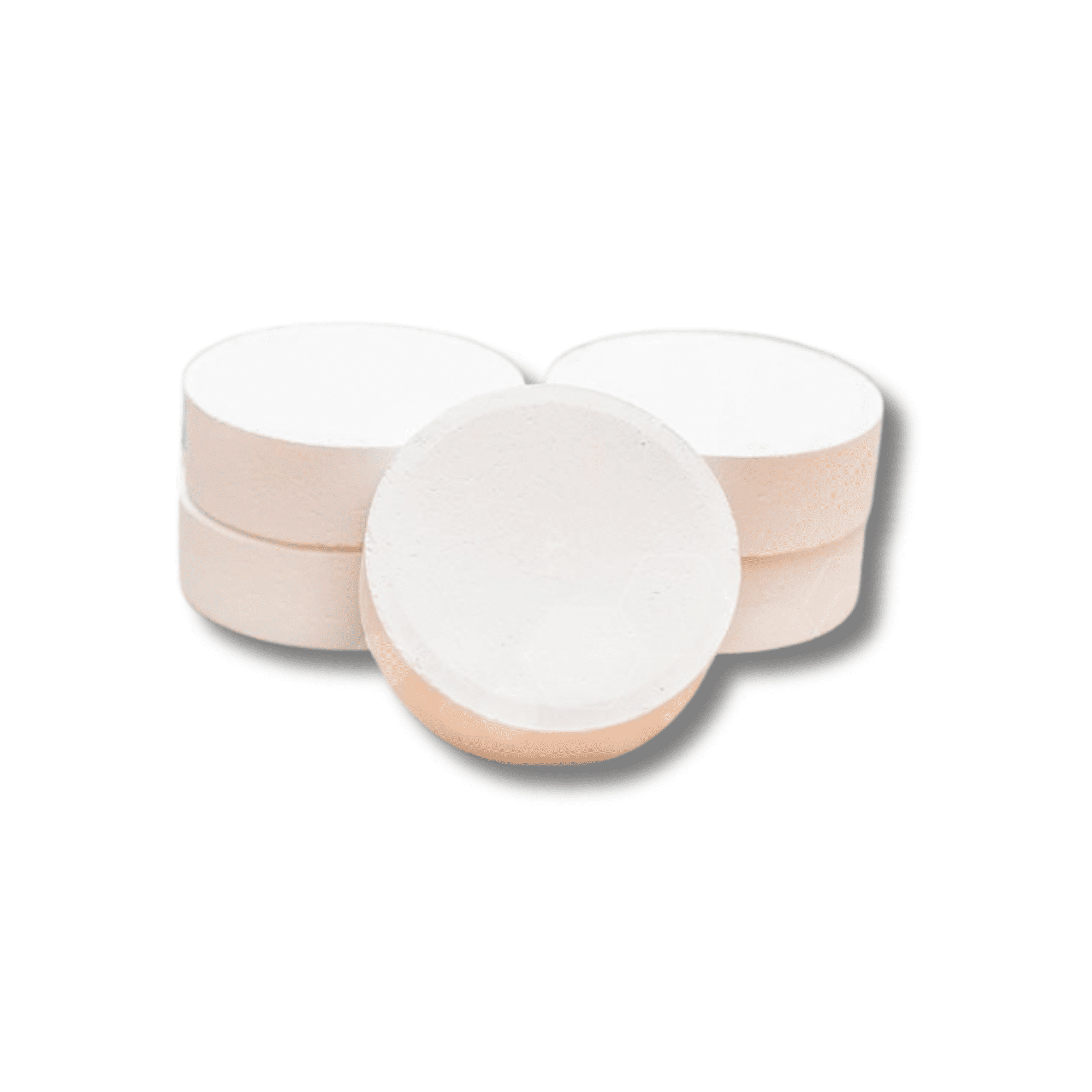
Calcium Hypochlorite
Chlorine hypochlorite is the most common compound of chlorine used in residential water treatment. Calcium hypochlorite increases the pH of the water it is being used to treat and can be sold as calcium hypochlorite pellets or granules. Calcium hypochlorite should also be handled with care as it is capable of generating enough heat to explode.
Sodium Hypochlorite
Easiest to handle of all three compounds, sodium hypochlorite can most easily be recognised as household bleach. A light-yellow liquid, it has a short shelf life compared to the other two compounds. Sodium hypochlorite also increases the pH of the water it is being used to treat, though lower concentrations are needed compared to calcium hypochlorite or chlorine gas.
Chlorine Gas
You may have heard of chlorine gas being used as a deadly weapon during WWII. Though, of all three chlorine compounds, gas is the least expensive and is perfectly safe for consumption when it is introduced to water. Its highly toxic properties make it an excellent water disinfectant. Chlorine gas is sold as a compressed liquid, as distributing in its raw form is extremely hazardous.